The plague road, p.1
The Plague Road, page 1


All the characters and events portrayed in this work are fictitious.
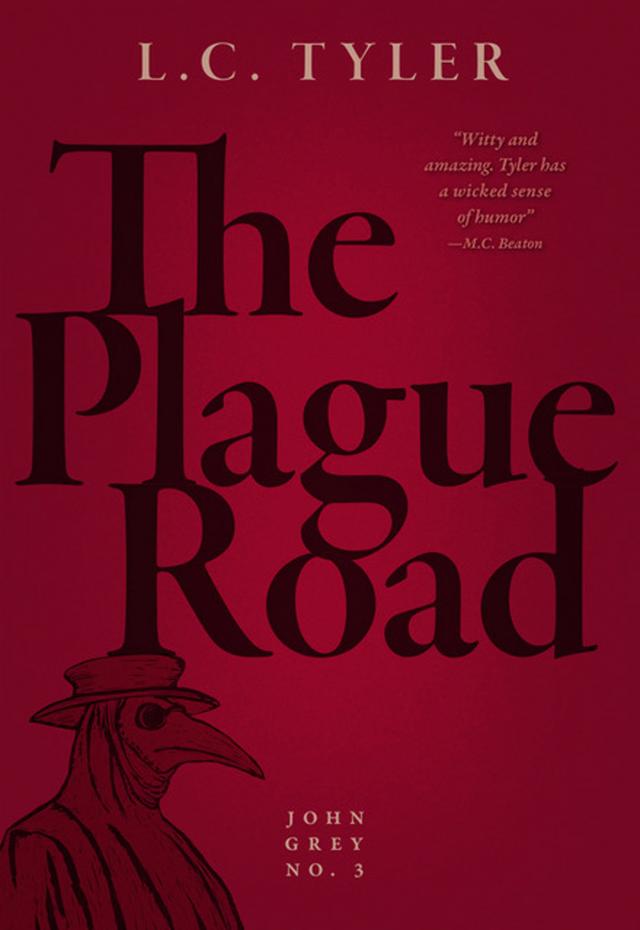
THE PLAGUE ROAD
A Felony & Mayhem mystery
PRINTING HISTORY
First UK edition (Constable): 2016
Felony & Mayhem edition: 2022
Copyright © 2016 by L. C. Tyler
All rights reserved
ISBN: 978-1-63194-262-4
978-1-63194-264-8 (ebook)
Manufactured in the United States of America
Cataloging-in-Publication information for this book is available from the Library of Congress.
To Eleri
A LIST OF PERSONS TO BE FOUND IN THIS BOOK
JOHN GREY—Myself. A lawyer, of sober habits but in no way a Puritan in spite of what you may be told by…
AMINTA, LADY POLE—née Clifford, my childhood friend and tormenter, now a writer of plays much admired by…
MR SAMUEL PEPYS—frequenter of the theatres, fondler of actresses, and Clerk at the Navy Office, the loyal creature of…
THE DUKE OF YORK—Lord High Admiral, almost-secret Papist and brother to…
HIS MOST GRACIOUS MAJESTY, KING CHARLES II—lately restored to his rightful place on the throne of England, Scotland, Ireland and (theoretically) France; well served by his Minister…
HENRY BENNET—occasionally my employer, newly ennobled as Lord Arlington and appointed Secretary of State, with responsibility for detecting Treason, as is…
MR JOSEPH WILLIAMSON—Arlington’s assistant and the only person in this narrative, other than myself, to be wholly trusted, the least dependable including…
SIR SAMUEL MORLAND—another assistant, formerly an employee of the now disgraced and posthumously beheaded Lord Protector Cromwell, duplicitous beyond any description I can give or you might believe, as is…
FATHER HORNCASTLE—purportedly a priest, who uses many aliases, including my own name for reasons which will become apparent, who may be in the pay of the Dutch (our enemies) or the Spanish (our other enemies) and who claims to have information that will bring down both the Duke of York and his father-in-law…
EDWARD HYDE, LORD CLARENDON—the Lord Chancellor, long-time companion-in-exile of the King and enemy of…
THE DUKE OF BUCKINGHAM—a somewhat fickle favourite of the King and good friend of his mistress…
BARBARA, LADY CASTLEMAINE—the chief (but to her great annoyance not the only) mistress of His Majesty, a friend of actors, such as…
PATRICK CALLINGHAM—a member of Lady Pole’s company, as is…
CHARLES FINCHAM—who is unfortunately dead before the story even begins.
The icon above says you’re holding a copy of a book in the Felony & Mayhem “Historical” category, which ranges from the ancient world up through the 1940s. If you enjoy this book, you may well like other “Historical” titles from Felony & Mayhem Press.
For more about these books, and other Felony & Mayhem titles, or to place an order, please visit our website at:
www.FelonyAndMayhem.com
Other “Historical” titles from
ANNAMARIA ALFIERI
City of Silver
Strange Gods
MICHELLE BIRKBY
All Roads Lead to Whitechapel
No One Notices the Boys
KENNETH CAMERON
The Frightened Man
The Bohemian Girl
The Second Woman
The Haunted Martyr
The Backward Boy
FIDELIS MORGAN
Unnatural Fire
The Rival Queens
ALEX REEVE
Half Moon Street
The Anarchists’ Club
KATE ROSS
Cut to the Quick
A Broken Vessel
Whom the Gods Love
The Devil in Music
L.C. TYLER
A Cruel Necessity
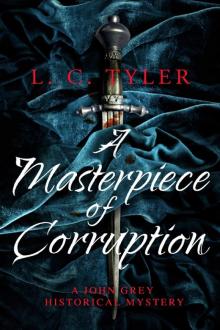
A Masterpiece of Corruption
LAURA WILSON
The Lover
The Innocent Spy
An Empty Death
The Wrong Man
A Willing Victim The Riot
OLGA WOJTAS
Miss Blaine’s Prefect and the Golden Samovar
CONTENTS
Prologue: London—Summer 1665
Chapter 1
Chapter 2
Chapter 3
Chapter 4
Chapter 5
Chapter 6
Chapter 7
Chapter 8
Chapter 9
Chapter 10
Chapter 11
Chapter 12
Chapter 13
Chapter 14
Chapter 15
Chapter 16
Chapter 17
Chapter 18
Chapter 19
Chapter 20
Chapter 21
Chapter 22
Chapter 23
Chapter 24
Chapter 25
Chapter 26
Chapter 27
Chapter 28
Chapter 29
Chapter 30
Notes and Acknowledgements
Prologue
London—Summer 1665
Jem wrapped his scarf more securely round his face and, in the dancing torchlight, surveyed the desolation before him. This wasn’t the sort of work he usually did, but it was work. Regular paid work. And there was little enough of that in London at the moment, what with most of the big houses shut up and all of the gentry fled to the country. It wasn’t heavy work either—not like ploughing or haymaking. And it was, you might say, a permanent position, in the sense that it would probably keep him in bread and ale until he died. Jem cautiously pulled the scarf down a couple of inches and repeated the invitation that he had been making all night to the citizens of London.
‘Bring out your dead!’ he called at the top of his voice. ‘Bring out your dead!’
The waggon behind him creaked and groaned as it rolled slowly through the grassy streets, its wheels grinding against the cobbles. It was full, but not too smelly, because they were doing regular collections now and usually got the customers loaded before they started to rot or fall apart too much. You wanted to get them into the cart and out of it again in one piece if you could. Of course they couldn’t complain about poor service, being as they were in various stages of putrefaction, but it was a matter of professional pride to Jem that head, body, arms and legs should if possible all go into the same pit, to be reunited in whatever manner God ordained on Judgement Day.
The light from the torches cast a hellish red glow over the lower floors of the shuttered houses. The upper storeys merged into the blackness of the night. No living creature stirred at this hour—not so much as a cat or dog. Jem hadn’t seen a cat or a dog for weeks, not since the Lord Mayor had wisely ordered a cull. There were plenty of rats, mainly on account of the lack of cats and dogs, but the cull had been necessary to make the city safe from the pestilence that was now in its third or fourth month—it was tricky saying when it had all started because for a long time nobody had wanted to admit that the Plague was in London, less still that it was in their own house, and the first deaths had been attributed quite imaginatively to all manner of causes. Two groats and a glass of ale got you a death certificate saying ‘consumption’ or ‘impostume of the head’, as you preferred; and coffin makers knew better than to enquire about why the deceased (cause of death: ‘teeth’) was quite so spotty. But Plague wasn’t something that could be kept secret for very long. When twenty people died of toothache in the same parish in the same week, folk began to smell a rat. Certainly nobody who strayed into London now could be in any doubt at all that things were not quite as they should be. Houses sealed up. Red crosses on the doors. And an all-pervasive smell of rotting flesh from the ones that nobody had found yet. On the plus side, there was plenty of work in new trades such as Searchers of the Dead and pit diggers and, of course, cart attendants.
‘Bring out your dead!’ Jem repeated, then, remembering the more artistic part of his duties, he rang the large brass bell that he carried.
Clerkenwell, where Jem came from, was reportedly now as bad as here in Westminster. The Plague was everywhere. He sometimes wondered about his family, whether they were still alive. Since he had become a dead-cart attendant, they didn’t ask him to visit so much. At the present rate, everyone would be dead soon everywhere. London would be one big pit of festering corpses, and the last man standing would have to shovel earth over his own head.
He gave the horse’s reins a tug, not because there was much point in going faster, but because as the captain of this little team he had to assert his authority from time to time, even if it was only with the horse. On either side of the cart, bearing the flickering torches, tramped Bill and Dick, their faces also covered to protect them from the invisible miasma that, everyone knew, spread the disease. Jem had additionally a bag of cloves round his neck, which he’d been sold as an infallible defence. He was also chewing tobacco because somebody had put round a rumour that no tobacconist had died since the Plague had begun. Trade in tobacco had increased ten-fold and Jem suspected he knew where the rumour had started. Well, he might as well spend his money on that than save it for a rainy day. No point in dying with silver in your purse. He’d need to remind Bill and Dick to check the pockets of the customers on the cart, though he suspected that they had already done so privately before they loaded up. Takings had dropped since Dick joined the team, and Jem reckoned he knew why. Lifting money after the corpses had been carried out, and Jem was watching,
‘A couple more over there,’ said Jem, halting the horse by an alleyway. ‘Fetch ’em onto the cart.’
Dick peered into the shadows. He could just make out two dark shapes. ‘We’re full, ain’t we?’
‘Always room for a couple of small ones,’ said Jem charitably.
The two bodies were propped against the wall, as if sleeping off the effects of too much ale, but their wide-open eyes gave evidence that they were not slumbering. Closer inspection revealed that one had the pink face and black fingers you often saw in customers. The other seemed untouched, except he was also dead. That was how it went. You never could tell exactly what the Plague would do to you.
The pink-faced man was starting to bloat up a bit and maybe had been there a little longer than the City Ordinances recommended. But the other looked fresh enough. They carried the fresh one first and dumped him face up on the cart, where he lay with his mouth wide open to the stars. They’d discussed a lot whether face up or face down was more respectful, though customers packed better if you did some one way and some the other. Bill looked at Jem, as if hoping he’d let them off the second one, but Jem shook his head.
‘I said, both of them. He’ll go on nice if you do him face down on top of the shoemaker’s wife. Look lively, now.’
‘Can’t we leave him for the next cart?’
‘No. I told you: fetch him over here. He’s not going to get better.’
‘It’s all right for you. You don’t have to touch him. The other one felt a bit…damp.’
‘Damp? There’s been no rain for weeks. Just get on with it. Unless you’d prefer to starve on the street. Plenty of others queuing up for a job like yours. Regular hours. No heavy lifting.’
‘He may not be heavy but he’ll fall apart if we move him.’
‘He’ll certainly fall apart if you don’t.’
Jem leaned against the cart and watched carefully as the last corpse was loaded. The man balanced corpulently on top of the heap, inflated by gases within but still in one piece. If there was money on either of those two, Jem thought to himself, he was having his share this time. And a share in the price of that ruby if he could prove Bill had taken it.
‘Time to go to the pit, lads,’ he said. ‘We’re full now.’
In fact they picked up another three as they trundled onwards to the nearest of the new Plague pits in Tothill Fields, the cool night air on their faces. It wasn’t bad work, if you could just keep healthy yourself.
Jem oversaw the unloading, holding both of the torches aloft, watching carefully to see whether the other two found anything worth pocketing.
‘Gently now!’ he called, from a safe distance. ‘These are Christian men and women. Have some respect there.’
Dick nodded as he and Bill tipped the cart, then respectfully prodded the bodies off with long poles, rolling them onwards into the dreadful chasm. One by one they dropped over the edge and joined their fellow citizens in the deep blackness below.
‘Wait!’ called Jem suddenly.
There was something odd about that last one. Something he couldn’t quite put his finger on. Something he had spotted as the body performed its final turn before being flicked on its way to eternal rest. Something that caught the orange light of the burning brands. Something that had impeded the customer’s proper rotation. Something, in summary, that should not have been there. All three looked down from the edge of the muddy chasm at one body amongst the hundreds that lay below them in every possible posture.
‘What’s that thing sticking out of his back?’ Jem demanded.
‘I’m not going down into that pit just so you can have the knife,’ said Dick. ‘It can’t be worth more than a shilling.’
‘That’s not my point,’ said Jem. ‘I mean, why is there a knife sticking out of that customer’s back?’
‘I don’t know,’ said Dick. ‘Could be all sorts of reasons.’
‘Get him back up here.’
‘Why?’
‘He don’t belong there.’
‘But he’s dead, ain’t he?’
‘Yes.’
‘And that’s a grave, ain’t it?’
‘Yes.’
‘So, what’s wrong with that?’
‘That pit,’ said Jem, ‘is for customers who’ve died of the Plague. You don’t get to be buried there—free and at the City’s expense—if you’ve died of something else. Stands to reason. Everybody would die of the Plague if you allowed that.’
‘What if we didn’t notice the knife? We didn’t see it in the dark—not until he landed on his front. And that’s the honest truth.’
‘So you say. Well, we have all seen it now, haven’t we? More than my job’s worth to bury him here.’
‘We could just chuck another customer or two on top of him…’
‘No.’
‘You fetch him out then,’ said Dick bravely. ‘If you want him so much, you do it.’
‘You threw him in. You fetch him out,’ said Jem.
The logic was irrefutable. So, with a very bad grace, and trusting in the light cast by two now guttering torches, Dick lowered himself carefully into the pit and began the joyful process of resurrection.
CHAPTER 1
Apart from the Plague, it is a perfect summer’s day.
From here, from this high, breezy casement looking out over Lincoln’s Inn Fields, the sky is a deep, untroubled blue. The trees have long since passed from their pastel spring green to the rich dark foliage of midsummer. The pale, brittle, sunscorched grass crackles underfoot. Heat trickles visibly from the stone paths. You can almost feel it from up here, through this wide-open window with its tiny, diamond-shaped leaded panes.
‘Mr Grey?’
Far below me, a small black figure begins to trudge across the broad expanse of bleached-out grass. He pauses and wipes his brow, but I cannot see his expression. I am curious about that.
‘Mr Grey?’
The man looks around him, then his legs seem to crumple and he falls to the ground. I wait to see if anyone will go to his aid, but nobody does. But I wasn’t expecting anyone to do so. Welcome to London in the summer of 1665.
‘Mr Grey, I think you might give me a little attention in view of the money I am paying you. Mr Grey, I am most displeased.’
I turn from the bright sunshine and let my eyes adjust to the gloomy shade of my room. My displeased visitor is seated by my cold, dusty fireplace in a well-cushioned chair. He is plump and rural and red-faced, and he is still slightly out of breath from his ascent to my chambers. The dust of the Essex road is on his clothes, for he has not tarried at an inn before coming to see me. He wishes to conclude his business and be gone as soon as he reasonably can. I think that the presence of the Plague in London worries him more than a little.
‘Mr Grey,’ he demands, ‘have you been listening to a single word that I have said to you? You appear regrettably distracted. You seem to think that the view through your window is of greater interest than your clients. Clients on whom you depend for your living, sir. Well, let me tell you that I have no intention of paying your outrageous fees if you treat me with such disdain and…’
I hold up my hand.
‘What?’ he says.
‘In 1601,’ I say, ‘your grandfather, William Ruggles, made a will leaving his estate to the male heirs of his body, named as John, Christopher and Andrew. In 1602 your father, George Ruggles, was born. On the death of your grandfather in 1642, the will was unaltered and John and Andrew held that, being the only named heirs surviving, the estate should be split between them in equal parts. Your father argued that he was nonetheless a male heir, for all that he had not been named, and threatened to take his brothers to court for his rightful share of one third, Christopher having died unmarried, albeit with four bastard children who, being too poor to be able to afford the services of a lawyer, need not detain us further. Am I correct so far?’