76 hours, p.1
76 Hours, page 1


Subscribe to our newsletter for title recommendations, giveaways
and discounts reserved only for subscribers.
Join here.
Praise for 76 Hours
“The take-no-prisoners debut novel by bestselling World War II historian Larry Alexander . . . The story is fast-paced and intense . . . If you want to know what it was like to invade an enemy-held island, read 76 Hours.”
—Jeff Shaara,
New York Times bestselling author
“New York Times bestselling WWII historian Larry Alexander captures the vicious reality of the Battle of Tarawa . . . His characters and prose are as tough as the marines who took the island against a dug-in foe.”
—Steven Pressfield,
bestselling author of Gates of Fire and A Man at Arms
BOOKS BY
LARRY ALEXANDER
STANDALONE NOVELS
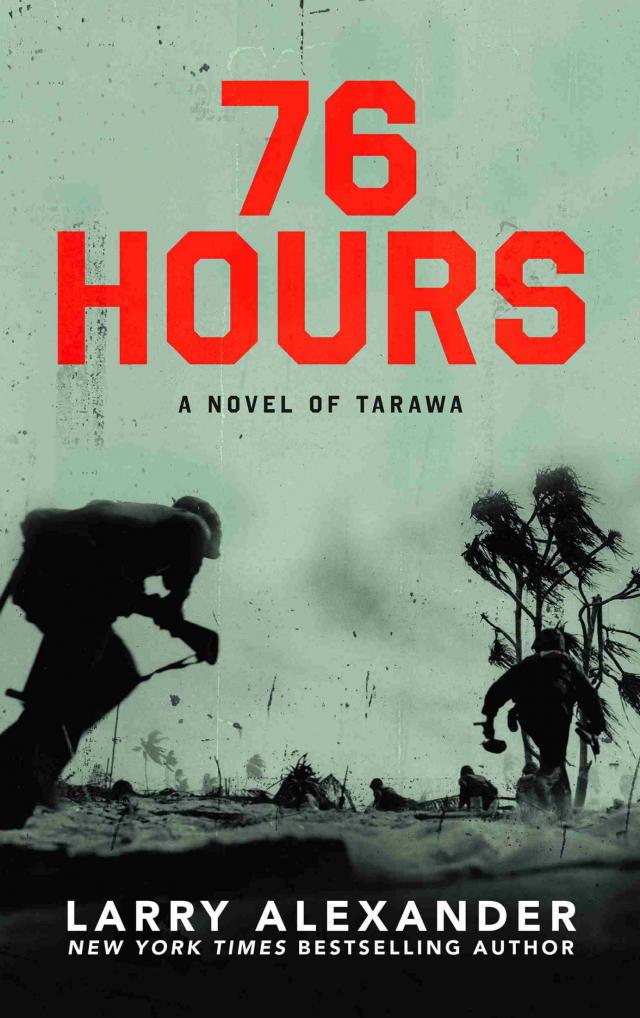
76 Hours
NONFICTION
Bloody Ridge and Beyond (with Marlin Groft)
A Higher Call (with Adam Makos)
In the Footsteps of the Band of Brothers
Shadows in the Jungle
Biggest Brother
Copyright © 2023 by Larry Alexander
E-book published in 2023 by Blackstone Publishing
Cover design by Gunjan Ahlawat
All rights reserved. This book or any portion
thereof may not be reproduced or used in any manner
whatsoever without the express written permission
of the publisher except for the use of brief quotations
in a book review.
Any historical figures and events referenced in this book
are depicted in a fictitious manner. All other characters
and events are products of the author’s imagination,
and any similarity to real persons, living or dead, is coincidental.
Trade e-book ISBN 979-8-200-81602-6
Library e-book ISBN 979-8-200-81601-9
Fiction / Historical / World War II
Blackstone Publishing
31 Mistletoe Rd.
Ashland, OR 97520
www.BlackstonePublishing.com
This book is dedicated to the thousands of men,
American and Japanese, who fought and sacrificed
amid the brutal, 76-hour struggle for Betio’s 381 acres
of blood-soaked sand and coral.
Part I
Saturday, November 20, 1943
Chapter 1
Tarawa burned.
Lying low on the water fifteen hundred yards away, tiny Betio, the main island in the Japanese-occupied Tarawa Atoll, glowed end-to-end like a hot coal as long, squat lines of landing craft ground their way toward the smoke-shrouded shore.
Hunkered down shoulder-to-shoulder with his comrades inside one of the many Higgins boats, Private Peter Winston Talbot nervously clutched his rifle as he watched the boat’s coxswain signal to Lt. Edward Pfeffer.
“We’re at the line of departure, men!” Dog Company’s young shavetail executive officer bellowed over the roar of the diesel. “Lock and load!”
Pete set the safety on his M1 Garand, pulled open the bolt, and took an ammo clip from a pouch on his bandolier. He shoved the clip into the weapon’s gaping receiver and gingerly slapped the operating rod forward, closing the bolt. A painful case of “M1 Thumb” and a loud, red-faced drill instructor at Parris Island had taught him the right way to load his weapon.
“You stupid, stupid sonofabitch!” Staff Sgt. Edward “Bull Moose” Blakely bellowed after Pete had pinched his abused thumb for the fourth time. “You’re gonna learn how to properly load this piece even if you lose that fuckin’ thumb and have to slam the breech shut with your goddamned dick. Christ on a crutch, where does the Corps find fuck-ups like you?”
He glowered at Pete who silently cursed the man. It was Blakely, fully aware of Talbot’s loathing of being told what to do, who tagged the hardheaded youth with the nickname “Hardball.”
“Heads down!” Gunnery Sgt. Earl Nicholson hollered.
Like the others, Pete ducked, but not before glancing ahead toward “Helen,” the island’s codename. Spread out before him were waves of landing boats, all LVTs, struggling toward the shore as the roar of the gunfire from Betio’s defenders grew louder. The first wave was well beyond the island’s protective coral reef and into the lagoon. Some had even unloaded their Marines. Close behind, the rest churned forward, enemy bullets clanging off their steel-reinforced prows while their passengers, soaked by near artillery misses that sent geysers of seawater cascading over them, prayed fervently. Before lowering his head, Pete watched three amtracs explode almost simultaneously, killing all on board.
Pete slid down along the gunwale, staring fish-like at “Professor” Steve Aldrich, the squad’s college boy whose face mirrored the horror Pete felt. Hunched down to Pete’s left, Robert Sherrod’s face was pale as the two exchanged worried looks. In his eagerness to cover the battle, the Time magazine war correspondent had hitched a ride in the first Higgins boat with room to spare.
Speaking loudly to be heard above the clatter of battle and the drumming of the boat’s diesel engine, Pete admitted to Sherrod, “Sweet Jesus but I’m scared.”
Normally one who guarded his privacy as voraciously as a young bride-to-be guards her virtue, Pete suddenly felt compelled to admit his fears to this man he’d just met on the troopship eighteen hours earlier.
“Hang in there, kid. I’m scared, too,” the veteran journalist admitted.
“But you’ve been through landings before, haven’t you?” Pete inquired.
“Yeah, but our landing at Attu was a cakewalk,” Sherrod said. “The Japs were dug in on high ground waiting for us to root them out. They didn’t defend the beach.”
Grinding toward Helen’s flaming shore, the Higgins boat thumped and jolted as it crossed the low swells, casting up waves that washed over the prow and onto the men inside. The bobbing and jouncing, mingled with the stench of burning fuel and roasting flesh wafting on the morning breeze, was too much for many of the frightened young Marines, and some began heaving their guts. The lucky ones puked over the side while others simply threw up on the deck, splattering their boots and those of their comrades, creating a putrid stew of seawater and semi-digested steak and eggs.
As the roar of battle swelled, Pete wondered if the three-hour pre-invasion bombardment, for all its clamor and fury, had killed even one of the Jap bastards.
Sherrod lifted his head until he could just barely see above the gunwale. He then slid back down, his face pale, fear embedded in his eyes.
“I can’t see a single landing craft on the beach,” he shouted over the racket, looking at Pete. “Three waves of alligators went in ahead of us. A hundred boats at least. And I can’t see a damned one on the beach.”
Having to see for himself, Pete raised his head slightly. Sherrod was not exaggerating. The lagoon seemed to be boiling under the impact of artillery and small arms rounds. Smoky clouds billowed, both from the shore and from the shattered alligators. On the island, geysers of dirt, sand, and flame leapt into the air as the carrier planes dropped their bombs. And above it all, Pete could hear men yelling in anger or screaming in agony above the unbroken clatter.
“Talbot!” Nicholson bellowed. “Get your goddamn head down before some Nip shoots it off your shoulders.”
Pete did as ordered.
Fuck you, Pete’s brain silently cursed.
Sherrod turned Pete’s way, a sympathetic smile creasing across his heavily tanned face.
“You know the difference between you and me, Talbot?” Sherrod said, a sad smile creasing his face. “You’re in this boat because you have to be. I’m here because I volunteered for this assignment.” He paused. “Volunteered. Can you believe that shit?”
Sherrod fell silent, not looking for an answer.
Ted Giovanni squatted beside Pete, his right shoulder against Pete’s left. Pete could feel his best friend shaking in fear.
“It wasn’t supposed to be this way,” he stammered, his mouth inches from Pete’s ear.
“Jesus Christ, Ted,” Pete told the short but sturdy Italian, “before we left the ship you were complaining about the naval bombardment, saying how you wanted the swabbies to save you some Japs to shoot at.”
“Yeah,” Ted replied, his dark eyes set deep below two bushy brown eyebrows now open wide with fear. “I wanted some left, but not all of ’em.”
Pete turned and shrugged.
Something pinged off the steel ramp of the Higgins boat with a sharp metallic ring. Then there came a second clang, followed in rapid succession by three more.
“What was that?” Pvt. Stanley “Pots” Potter gasped.
“Son of a bitch,” Pete’s squad leader, Sgt. Toby Banks, said. “The bastards found our range.”
Two more bullets ricocheted off the ramp. Behind Pete, Ted Giovanni jumped at each hit.
“Oh, God,” he muttered.
Pete turned and saw Ted reach inside his blouse, his fingers nervously searching for his rosary.
Rub those beads all you want, Pete thought, God isn’t gonna help you here. He’s covering his own ass right now.
Next to Ted, Private Walter Hullihen saw his friend rubbing the beads in silent prayer and said, “My daddy was a firm believer in the power of prayer. I’ll pray for you, Feather Merchant.”
&n bsp; “Thanks,” Ted whispered.
The North Carolinian glanced at Pete.
“I’ll pray for you too, Hardball,” he said.
“Pray for your own ass, Honeybun,” he replied.
Sherrod tapped Hullihen on the shoulder.
“Honeybun?” he asked.
The fair-haired young man grinned sheepishly. He told the war correspondent about how his great-uncle, also named Walter Hullihen, had been a lieutenant on General JEB Stuart’s staff during what the boy called the War of the Rebellion and how Stuart, in a play on the name Hullihen, had dubbed him Honeybun. During the cruise from San Diego to Australia, Hullihen had shared the story with his buddies in the platoon.
“Up until then he had no nickname,” Pete injected. “So . . .”
The other men of the squad within earshot laughed, both because the story was funny and as a short relief from tension.
“Don’t worry about it son,” Sherrod told Hullihen. “I’m a Southern boy too and I think your great-uncle would be proud of you. It comes to you from a fine heritage.”
Honeybun smiled.
The men fell silent.
Pete now found that his hands had begun trembling. To calm himself, he removed his helmet and gazed at the black-and-white photo secured between his hard-plastic liner and the webbing. The round, pudgy-cheeked face of Agatha Barnoffski smiled at him.
Sherrod nudged Pete’s arm, extending a hand clutching a pack of Chesterfields.
“Cigarette?” he inquired.
“No thanks,” he replied. “I’m a Camel smoker myself. I’ve smoked them since I was a kid.” Fearing he might’ve insulted the journalist, he lamely added, “But I did enjoy listening to the Chesterfield Hour on the radio back home.”
Great, Pete cursed to himself immediately after the words left his lips, now he thinks you’re an idiot.
“Cute girl,” Sherrod said, indicating the photo. Pete nodded his thanks and put the steel pot back on his head.
“So where’s home, Talbot?” Sherrod asked, emitting cigarette smoke as he spoke.
“Chester, Pennsylvania,” he replied.
“Near Philly,” Sherrod mused. “I’m from Georgia,” he added slowly as if to emphasize his soft Southern accent.
“I got a buddy in my platoon from Georgia,” Pete said. “We call him Reb.”
Sherrod nodded as Pete again mentally kicked himself.
Think before you talk, goddammit, he told himself. You sound like a goofy kid.
A shell from a Japanese shore battery burst like a thunderclap just ahead of the boat, sending up a tall, watery plume that drenched everyone and left many to spit salt water. “Jesus, I shit in my pants,” one man moaned. Jarred by the blast, the boat’s engine sputtered, then caught and continued churning shoreward.
Another blast, this one closer, sent a jagged shard of shrapnel ripping through the plywood bulkhead just ahead of Pete, burrowing itself inside “Pots” Potter. The skinny, tousle-haired youth from Atlantic City, New Jersey, let out a wail and collapsed to the deck. Blood oozed from a gash in the right side of his blouse just above the waist, mingling with the piss and vomit on deck. Someone cried, “Corpsman!”
“Clear a path!” Pharmacist Mate First Class Ryan Magruder shouted as he pushed his way forward.
Pete watched in horrified fascination as Magruder unflinchingly tore open Pots’ blouse. The chunk of steel protruding from his wound was still hot to the touch. Wrapping his hand in a piece of cloth from the torn shirt, Magruder yanked the offending metal free and tossed it overboard. Removing the shrapnel drew a loud moan from Pots who had been muttering, “Oh God, oh God,” over and over since he’d been hit.
“Easy, Potsy,” Magruder told the injured young man. “You’re fine.”
“Am I goin’ home, Doc?” the boy asked through clenched teeth.
“You’ll be strollin’ along the boardwalk long before we get stateside,” the corpsman replied.
Magruder began treating the mangled flesh, coating the wound with sulfa powder to help prevent infection and coagulate the blood, then applying a layer of gauze before tightly wrapping the area with a bandage. He followed up with a jab from a morphine syrette. Dipping a finger in Potter’s blood, Magruder wrote “1 M” on the wounded man’s forehead so that the hospital ship would know he’d been given one dose of the pain-killing panacea.
Pete turned away, trying to shut it all out.
“I don’t want that to happen to me,” Pvt. Charles “Bucket” Harnish half sobbed. “Dear God, I don’t want that to happen to me.”
“It won’t happen to you,” the Professor said, trying to keep his friend from panicking. “Just get a grip.”
“How y’all know that?” Bucket’s buddy, Pvt. William “Reb” Marshall, insisted. “They’re killin’ us in theah, boy.”
“Reb’s right,” Ted chimed in. “What are we gonna do?”
“You’re gonna get out of this boat, get your ass onshore, and do your goddamned jobs,” Lance Cpl. Bob Willoughby snarled. “Stick to your training.”
The stern words from the veteran of the New Georgia jungles stifled the young men’s chatter but not their inner terror.
Then the nightmare got worse.
As bullets continued to flatten themselves on the Higgins boat’s steel ramp, the landing craft’s engine suddenly throttled back.
“Jesus Christ,” the coxswain spat. “It’s that goddamned barrier reef. They told us we could cross it without any trouble.”
“You can’t clear it?” Lt. Pfeffer asked, poking his head up for a look.
“Hell, no,” the coxswain said, stopping the craft several feet from the jagged protrusion of the coral barrier. “It’s stickin’ up a foot outta the fuckin’ water. The amtracs could drive over but we’re screwed.”
Around them, other boats also began to stop. A few struck the reef and got hung up on the gnarled spires.
“Guess we walk,” Pfeffer said resignedly.
At that moment another engine sound was heard and a voice called out, “Hold up there! I’ll take some of you in.”
The voice was from the pilot of an alligator that had off-loaded its first batch of Marines and was now returning to the reef to bring in more. The tracked vehicle ground up and over the coral barrier and stopped beside the Higgins boat.
“I can take half of you in partway then try to come back for the rest,” the LVT’s coxswain called over.
Pfeffer did not hesitate.
“Lt. Cornwall!” the company XO barked. “Take part of your platoon and a mortar team and go. The rest of us will walk. We’ll join up on the beach.”
Cornwall nodded then barked, “Nicholson!”
“Aye, aye Skipper,” Nicholson returned. Then, “Second Squad, over the side. Baker, bring your mortar crew. Colby, bring that radio.”
Wordlessly, Pete and the rest of the men shouldered their weapons and began scaling the slippery bulkhead of the landing boat.
“I’m going, too,” Sherrod said and hoisted himself over the side and into the alligator before anyone could object.
Pete was right behind Nicholson. As he climbed the Higgins boat’s side and was just about to lower himself into the LVT he froze. Lying on the deck of the alligator was a dead Marine sprawled in a pool of his own blood, a jagged hole through the front of his helmet. The bullet left his young face dark and misshapen, and had the dead man been Pete’s best friend, he might not have recognized him. One of the alligator’s crewmen saw Pete’s horrified face.
“We didn’t have the heart to heave him overboard,” he explained.
Swiftly, Nicholson knelt at the dead boy’s side. Ripping apart the slain youth’s pack, he withdrew the camouflaged poncho and covered the body. He glared at the boat’s skipper.
“Goddammit, my boys don’t need to see this,” he snarled.
Pete dropped into the LVT and other men followed, including Magruder. The wounded Potter remained on the Higgins boat.
Barrel-chested Pvt. John “Bull” Marino was having difficulty transferring over while burdened down with the cumbersome Browning Automatic Rifle.