I Wonder as I Wander

I Wonder as I Wander

Langston Hughes

Langston Hughes

In I Wonder as I Wander, Langston Hughes vividly recalls the most dramatic and intimate moments of his life in the turbulent 1930s.His wanderlust leads him to Cuba, Haiti, Russia, Soviet Central Asia, Japan, Spain (during its Civil War), through dictatorships, wars, revolutions. He meets and brings to life the famous and the humble, from Arthur Koestler to Emma, the Black Mammy of Moscow. It is the continuously amusing, wise revelation of an American writer journeying around the often strange and always exciting world he loves.
Read online
  • 476
Not Without Laughter

Not Without Laughter

Langston Hughes

Langston Hughes

Rediscover the great Harlem Renaissance poet's first and only novel, an elegiac, elegantly realized coming-of-age tale.Langston Hughes's Not Without Laughter (1930) is drawn in part from the author's own recollections of youth and early manhood. "I wanted to write about a typical Negro family in the Middle West," he later explained of his award-winning debut, and it is as a fond and richly anecdotal family and community portrait that his book comes to life. Following Sandy Rogers from his boyhood in rural Kansas to his arrival in Chicago as a young man, and set against a backdrop of poverty, segregation, and the onset of World War I, it introduces us to a host of vividly realized characters along the way: Sandy's pious, redoubtable grandmother Hager, who holds the generations together; his itinerant father Jimboy with his guitar; mother Annjee, who keeps house for wealthy whites; blues-singing Aunt Harriet; proper, social-climbing Aunt Tempy; and many more.
Read online
  • 142
Selected Poems of Langston Hughes

Selected Poems of Langston Hughes

Langston Hughes

Langston Hughes

With the publication of his first book of poems, The Weary Blues, in 1926, Langston Hughes electrified readers and launched a renaissance in black writing in America. The poems Hughes wrote celebrated the experience of invisible men and women: of slaves who "rushed the boots of Washington"; of musicians on Lenox Avenue; of the poor and the lovesick; of losers in "the raffle of night." They conveyed that experience in a voice that blended the spoken with the sung, that turned poetic lines into the phrases of jazz and blues, and that ripped through the curtain separating high from popular culture. They spanned the range from the lyric to the polemic, ringing out "wonder and pain and terror-- and the marrow of the bone of life."The poems in this collection were chosen by Hughes himself shortly before his death in 1967 and represent work from his entire career, including "The Negro Speaks of Rivers," "The Weary Blues," "Still Here," "Song for a Dark Girl,"...
Read online
  • 66
The Panther and the Lash

The Panther and the Lash

Langston Hughes

Langston Hughes

I am the American heartbreak--The rock on which FreedomStumped its toe--The great mistake That Jamestown madeLong ago.-- Langston Hughes, "American Heartbreak"From the publication of his first book in 1926, Langston Hughes was America's acknowledged poet of color, the first to commemorate the experience--and suffering--of African Americans in a voice that no reader, black or white, could fail to hear. In this, his last collection of verse, Hughes's voice is more pointed than ever before, as he explicitly addresses the racial politics of the sixties in such pieces as "Prime," "Motto," "Dream Deferred," "Frederick Douglass: 1817-1895," "Still Here," "Birmingham Sunday," "History," "Slave," "Warning," and "Daybreak in Alabama." Sometimes ironic, sometimes bitter, always powerful, the poems in The Panther and the Lash are the last testament of a great American writer who grappled fearlessly and artfully with the most compelling issues of his time.
Read online
  • 64
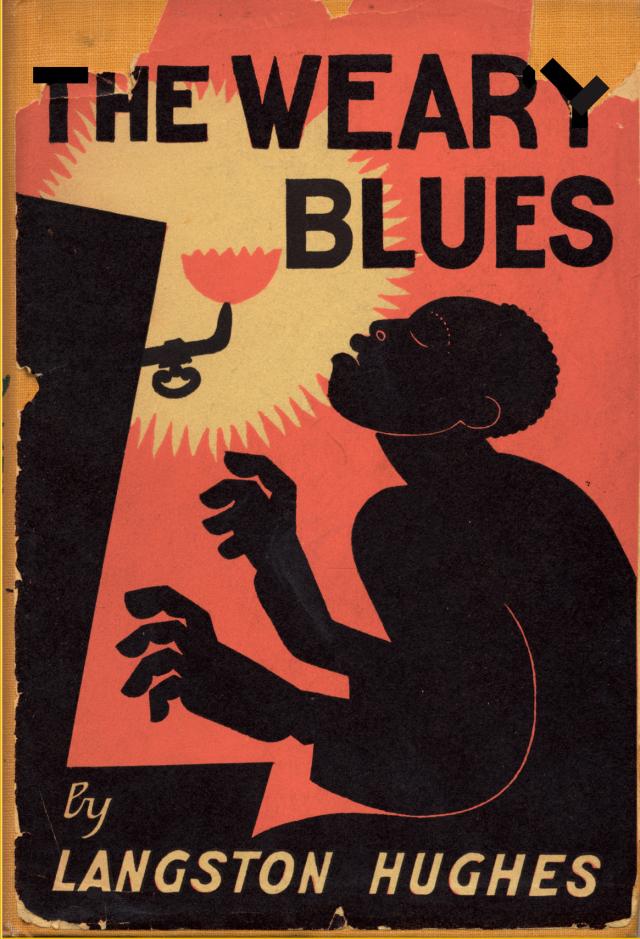
The Weary Blues

The Weary Blues

Langston Hughes

Langston Hughes

A beautiful new edition of this beloved poet's first collection, originally published in 1926 when he was just twenty-four.From the opening "Proem" (prologue poem) he offers in this first book-"I am a Negro: / Black as night is black, / Black the depths of my Africa"-Hughes spoke directly, intimately, and powerfully of the experiences of African Americans, at a time when their voices were newly being heard in our literature. As his Knopf editor Carl Van Vechten wrote in a brief introduction to the original 1926 volume, illuminating the potential of this promising young voice, "His cabaret songs throb with the true jazz rhythm; his sea-pieces ache with a calm, melancholy lyricism; he cries bitterly from the heart of his race...Always, however, his stanzas are subjective, personal" and, he concludes, they are "the expression [of] an essentially sensitive and subtly illusive nature." That illusive nature darts among these early lines and begins to reveal itself,...
Read online
  • 62
Tambourines to Glory

Tambourines to Glory

Langston Hughes

Langston Hughes

Finally available in trade paperback, Langston Hughes's breezy parable of good and evil, friendship and betrayal, is an unforgettable portrait of 1950s Harlem and two women called to the pulpit for very different reasons.For every bustling jazz joint that opened in Korean War--era Harlem, a new church seemed to spring up. Tambourines to Glory introduces you to an unlikely team behind a church whose rock was the curb at 126th and Lenox.Essie Belle Johnson and Laura Reed live in adjoining tenement flats, adrift on public relief. Essie wants to somehow earn enough money to reunite with her daughter and provide her with a nice home; Laura loves young men, mink coats, and fine Scotch. On a day of inspiration, the friends decide to use a thrift-store tambourine and a layaway Bible to start a church.Their sidewalk services are a hit: Laura's a natural street performer who loves the limelight, while Essie is a charismatic singer with a quiet...
Read online
  • 60
183